
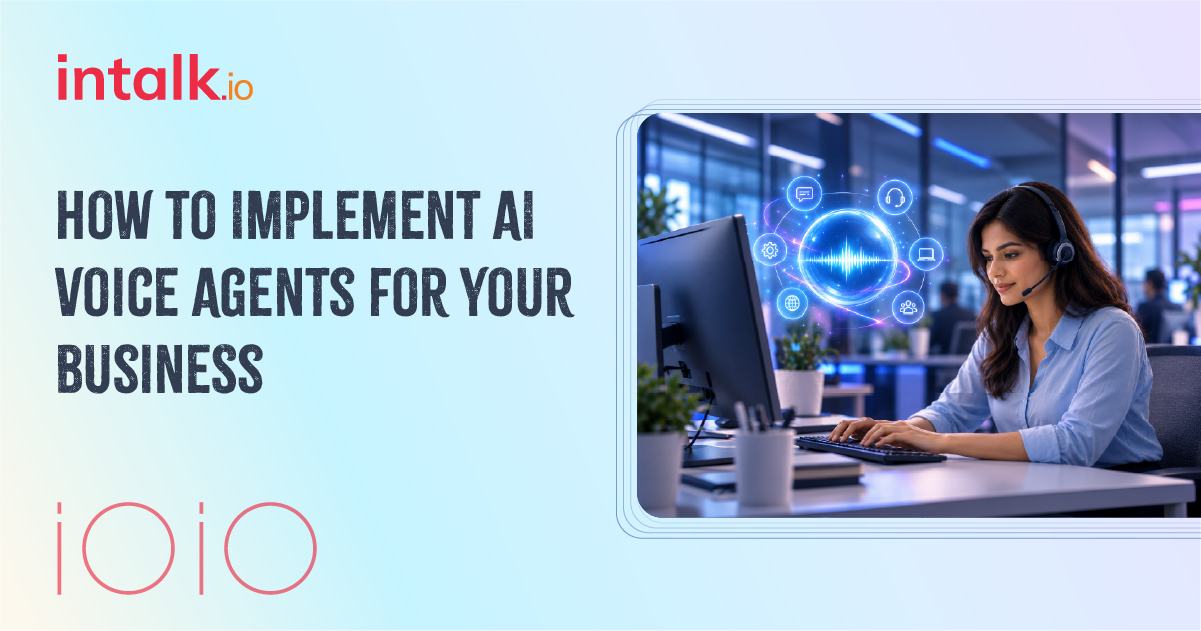

The difficult part of implementing an AI Voice Agent usually begins after the technology has been chosen.
An AI voice model can understand speech and generate a series of responses. A business has to decide what that the responses should accomplish, which information the agent can use, which systems it can access, what actions it can perform, and where a human needs to take over. Those decisions determine whether Voice AI becomes part of an existing operation or remains a separate conversational layer sitting alongside it.
A useful AI Voice Agent should have a defined role within the organisation. It may handle a particular category of customer enquiries, qualify leads, confirm appointments, follow up on payments, collect information, or manage another recurring interaction. The underlying technology can remain similar across these use cases, while the data, integrations, permissions and workflows around it can be very different.
For businesses considering voice AI solutions, the question is therefore less about whether an AI agent can hold a conversation and more about where that conversation can create a useful outcome.
Identifying use-cases for AI Voice Agents in Your Business
Voice is already part of many business processes, particularly where customers need an immediate answer or where a conversation has traditionally required an employee’s time. The opportunity for an AI Voice Agent comes from identifying interactions where the objective, information required and next action can be defined clearly enough for software to handle them.
Customer-facing use cases can range from straightforward information requests to workflows that involve multiple systems. An ECommerce company may use voice automation for order updates, delivery enquiries or post-purchase follow-ups. A healthcare organisation may use it for appointment reminders and scheduling. A financial services company may have defined workflows around payment reminders, account assistance or lead verification. Real estate businesses can use voice interactions for lead qualification and follow-ups, while education providers may apply them to admissions enquiries and appointment coordination.
The industries change, but the underlying question remains similar: what part of the conversation follows a process that can be clearly defined?
This distinction becomes particularly important when choosing a first use case. A business may have thousands of support calls, but that does not mean all of them should be handed to an AI agent. A better starting point could be one recurring category within those calls where the required information is available, the outcome can be measured, and the boundaries of the interaction are understood.
Internal workflows can also offer opportunities. Voice AI can support lead follow-ups, information collection, reminders and other recurring activities that currently depend on employees making or receiving calls. The resulting information can then move into the next business process through an existing application or workflow.
The purpose of identifying a use case is therefore larger than finding something the AI can technically automate. It is about defining where the AI can take responsibility for a meaningful part of an existing process.
What Does An AI Voice Agent Need To Work Efficiently?
Once the use case has been defined, the implementation starts looking less like a single AI product and more like a connected technology stack.
The first layer is voice and telephony infrastructure. The agent needs to receive incoming calls or initiate outbound ones, establish the connection, stream audio, manage call states and transfer interactions when required. For a business that already operates a contact centre, this infrastructure also needs to coexist with existing routing and agent workflows.
The second layer is the AI and voice-streaming system that interprets what the caller says and determines the next step. Speech recognition, conversational intelligence and speech generation all contribute to the interaction, but their usefulness depends on the workflow surrounding them. The agent needs to retain relevant context during the conversation and understand which information or action is required at each stage.
The third layer connects the agent to the systems where the business’s information actually lives. Customer details may sit inside a CRM, order information inside an ECommerce platform, appointment availability inside a scheduling application, and transaction information inside a financial system. The agent needs controlled access to these systems if it is expected to do more than provide generic answers.
Then comes the workflow itself. The business has to define what the agent can do, what information it can access, which actions require confirmation, and what should happen when the request falls outside the defined process.
This is where implementation becomes specific to the organisation. The same underlying AI voice technology can support very different business workflows depending on the data, permissions and integrations attached to it.
How AI Voice Agents Integrate With Existing Business Systems
An AI Voice Agent becomes significantly more useful when it can work with the systems that already run the business.
Consider a customer asking about a delayed order. The agent may need to identify the customer, locate the relevant order, check the latest fulfilment or delivery status and communicate the available information. If the customer then wants to change the delivery address, the conversation moves from information retrieval to an action that may need to be performed through the order-management system.
The caller experiences one interaction. Behind it, the voice agent may be communicating with several applications.
This is the role of voice AI integration. APIs allow the conversational layer to exchange information with CRM platforms, ERPs, databases, helpdesks, scheduling systems and other business applications. The agent can request the information required for a conversation and, where the workflow permits it, trigger an action in the connected system.
CRM integration is particularly important because customer interactions rarely exist in isolation. A sales call may need to update a lead record. A support interaction may need to add information to an existing ticket. A follow-up call may need to refer to a previous interaction before continuing the conversation.
Agami Tech’s intalk.io platform currently lists integrations with platforms including Salesforce, Zoho, Freshdesk, HubSpot and LeadSquared, alongside WhatsApp Business and other customer-experience tools. Agami also highlights integrations with enterprise systems such as Salesforce CRM, HDFC’s Lead Management System and Oracle databases across its technology work.
The important consideration is what those integrations allow the agent to do. A connection that simply displays customer information serves a different purpose from one that allows the agent to retrieve live data, update records, trigger workflows and pass the outcome of a call back into the business system.
This is also where AI voice API capabilities become relevant. APIs provide the mechanism through which the voice agent can interact with applications outside the conversation itself, allowing the call to become part of an existing workflow rather than a separate activity that employees have to process afterwards.
What To Look For In An AI Voice Platform
Choosing an AI voice platform requires looking beyond how natural the voice sounds in a demonstration. A production environment introduces requirements around response time, integrations, security, scale and monitoring that are difficult to judge from a short conversation.
Latency is one of the first considerations. Voice conversations have a natural rhythm, and delays can become noticeable when the system has to process speech, retrieve information and generate a response. The platform’s ability to handle streaming audio and coordinate these stages affects how the interaction feels to the caller.
Integration capability is equally important. Businesses should examine how the platform connects with their existing CRM, databases, helpdesk, ERP and telephony infrastructure, and whether those connections support the actual actions required by the workflow. An integration that exists on a product sheet has limited value if the agent still requires employees to manually complete the important part of the process.
Scalability becomes relevant as soon as Voice AI moves beyond a controlled deployment. Call volumes can change around campaigns, product launches, seasonal demand and business expansion. The platform needs to support the expected level of concurrent interactions while maintaining consistent performance.
Security requires the same attention. Voice interactions can contain personal, financial and operational information, while transcripts and call records can create additional data stores. Businesses should understand how conversations are protected, who can access them, how long information is retained, and what controls exist around sensitive workflows.
Analytics provides another layer of visibility. Once an AI Voice Agent is handling live conversations, teams need to understand what is happening across those interactions. Call outcomes, transfers, recurring questions, escalation patterns, conversation quality and other measures can reveal where the agent is performing as intended and where the workflow needs to change.
Customisation then determines how closely the platform can adapt to the business. An agent handling appointment scheduling may require a very different conversation flow from one qualifying sales lead. The platform should allow organisations to define those workflows, connect the relevant data and establish appropriate escalation rules.
The right AI voice agent platform therefore needs to be evaluated as infrastructure for a business process, rather than simply as a tool for generating spoken responses.
Build Vs. Buy An AI Voice Solution
Building an AI voice solution internally gives an organisation control over the individual components of the system. An engineering team can select its preferred speech technologies, models, telephony infrastructure, orchestration layer and integration architecture, then develop the system around its own requirements.
That approach can make sense when a business already has substantial internal AI and engineering capabilities or has requirements that demand control over the underlying architecture.
It also means taking responsibility for the infrastructure around the model.
Telephony, voice processing, orchestration, integrations, monitoring, analytics, security and ongoing system maintenance all become part of the internal technology workload. Changes in models and voice technologies can also introduce another layer of maintenance over time.
An existing ready Voice AI platform takes a different approach. Instead of assembling every layer independently, a business can start with an established voice infrastructure and configure it around its own workflows and systems.
For many organisations, the relevant question is therefore less about whether they can build a voice agent and more about which parts of the system they actually need to own.
IT teams evaluating an AI voice platform should look at the architecture beneath the interface. How does it connect with existing telephony? Which APIs are available? How are business applications integrated? How are permissions handled? What happens when a connected system is unavailable? How does a call move to a human agent? What information is retained after the conversation?
These questions reveal the operational implications of the choice far more clearly than a product demonstration alone.
AI Voice Agent Implementation: Key Considerations
The implementation process becomes considerably clearer once the business separates the conversational experience from the operational system around it.
Start With The Use Case
The first implementation should have a specific purpose and a measurable outcome.
“Handle customer calls” is too broad to define a reliable workflow. “Confirm appointments and reschedule them when requested” provides a much clearer starting point because the information, systems and possible outcomes can be mapped in advance.
The team can then determine which parts of the conversation the AI should own and where the interaction should move elsewhere.
Map The Data And Security Requirements
Before the conversation is designed, the business should identify the information the agent will need and where that information resides.
For each stage of the workflow, teams should understand what the agent can read, what it can change, and which actions require additional verification or human approval.
Security needs to be designed into this process because voice conversations can expose the same sensitive information that exists in other customer channels. Authentication, access controls, recording policies, data retention and audit requirements should therefore be considered alongside the conversation flow.
Map Integration Complexity
The apparent simplicity of a voice workflow can hide considerable integration work. A request that sounds straightforward to a customer may require information from several systems. A refund enquiry, for example, could depend on order status, return status and payment information held in separate applications.
Mapping these dependencies before implementation helps establish what the AI can actually complete during the call and where another system or employee needs to take over.
Test And Monitor Real Conversations
A scripted demonstration shows whether an agent can follow the intended path. Production calls reveal what happens when the conversation moves away from that path.
Callers interrupt, change their requests, provide incomplete information, use unfamiliar terms and ask questions that were absent from the original workflow. Testing needs to account for those situations.
Monitoring continues after launch. Teams should examine actual conversations to identify repeated clarification, failed workflows, unexpected questions and frequent transfers. Those patterns can inform changes to the agent’s instructions, integrations, knowledge and conversation design.
Define Human Escalation
A useful AI Voice Agent needs a clear understanding of where its responsibility ends.
Some interactions require judgement, exception handling or a level of assistance that the automated workflow cannot provide. The system should have defined conditions for escalation and a reliable way to transfer the conversation to the appropriate human team.
The handoff should preserve relevant context wherever possible. Asking a customer to explain the entire issue again can turn a successful AI interaction into another support problem.
Implementing Voice AI As Part Of The Business
The implementation of an AI Voice Agent is ultimately a systems decision. The voice is the part the customer hears, but the effectiveness of the interaction depends on everything connected to it: the telephony infrastructure, the AI layer, the business applications, the data, the workflow rules and the people responsible for handling exceptions.
This is why the first step should be a clearly defined business process. Once that process is understood, the technology can be evaluated against the information it needs, the actions it must perform, the systems it has to connect with and the points where human involvement remains important.
For organisations evaluating voice AI solutions, an AI voice agent platform can provide the underlying infrastructure while allowing the business to focus on its own workflows and integrations. Agami Tech’s Intalk ecosystem brings together cloud contact-centre capabilities, AI Voice Bots, voice infrastructure, business integrations and analytics within its broader customer-experience technology stack.
The implementation question then becomes much more practical: which conversation should the AI own, what does it need to complete that conversation, and how should the rest of the business respond when the conversation moves beyond its defined role?